Henderson Island
Latitude 24.37 S
Longitude 128.33 W
(map)
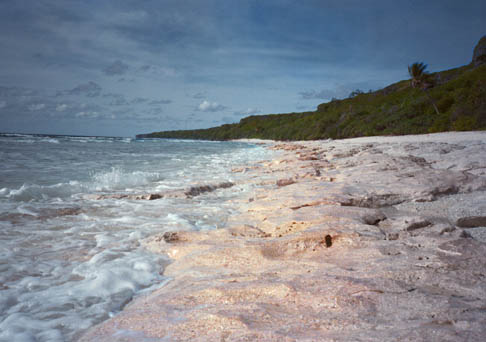
Henderson Island, North Beach, June, 1997
This island in the Pacific Ocean has been designated a World Heritage Site.
It is one the few places in the world with its ecology virtually
unaltered by man which permits the study of
the dynamics of insular evolution and natural selection.
Henderson is particularly notable for ten plants and
four land birds endemic to the island.
Henderson Island was
sighted by European voyagers in 1606.
Pedro Fernandez de Quiros, a Portuguese navigator sailing for the
Spanish King, discovered the island on January 29, 1606, naming it
"San Juan Bautista".
Years later in 1819, Henderson Island was sighted by the HMS Hercules,
and was named for its Captain. It was then sighted by the American
ship Elizabeth and was called Elizabeth Island in early accounts.
With its nearest neighbor being
Pitcairn Island, Henderson
is a long way from anything else.
Where is Pitcairn?
It is a good example of the many barren islands that but for lack
of a source of water could be another lush tropical paradise.
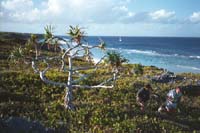
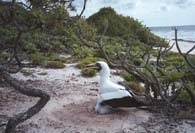
The above two photos are from our June, 1997 visit to the Pitcairn
Islands.
Click on the images for larger pictures (left: the dense interior of
Henderson Island; right: a masked booby with baby nesting).
More details of the trip
can be found
in our Pitcairn Island Adventure.
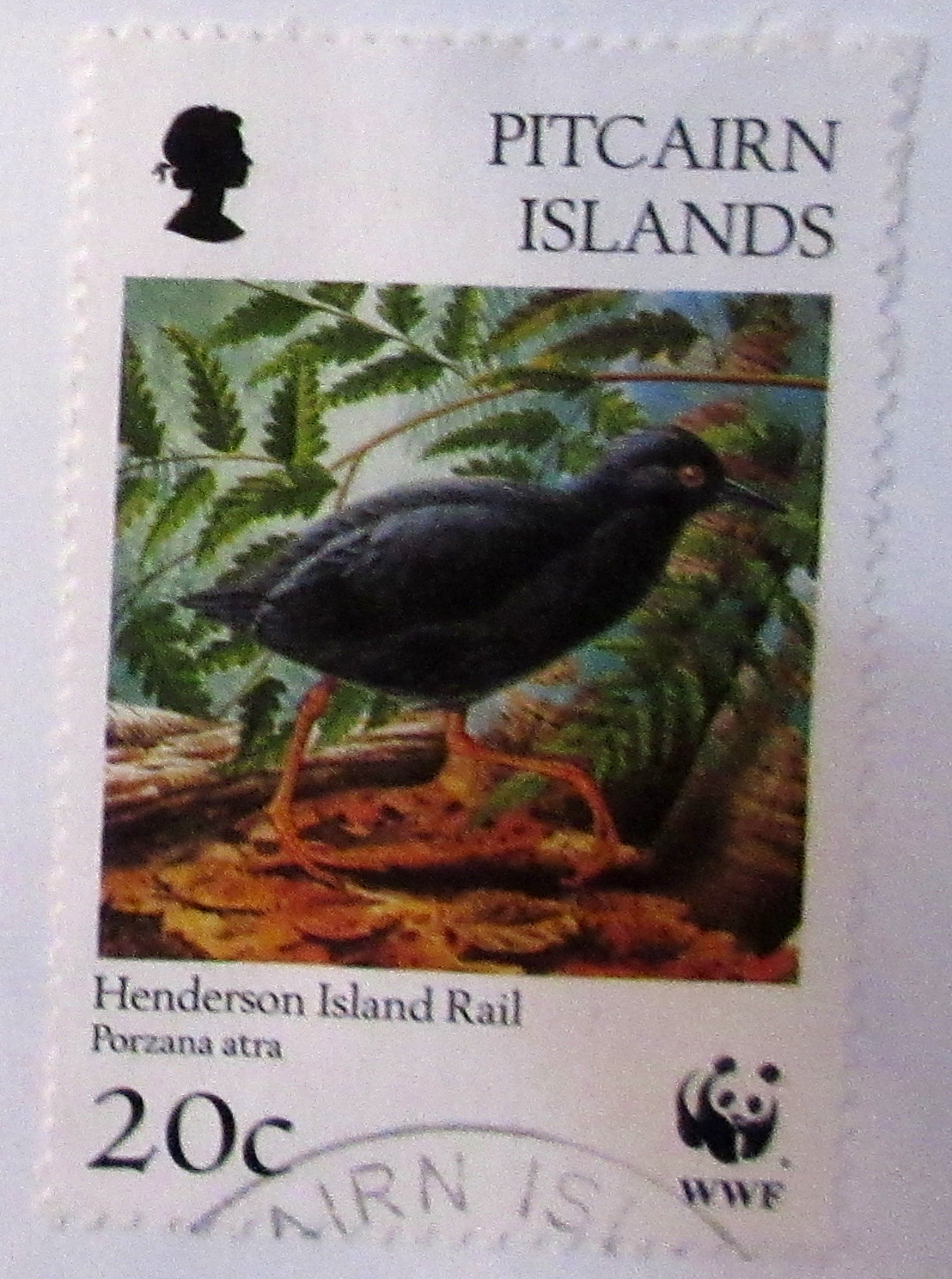
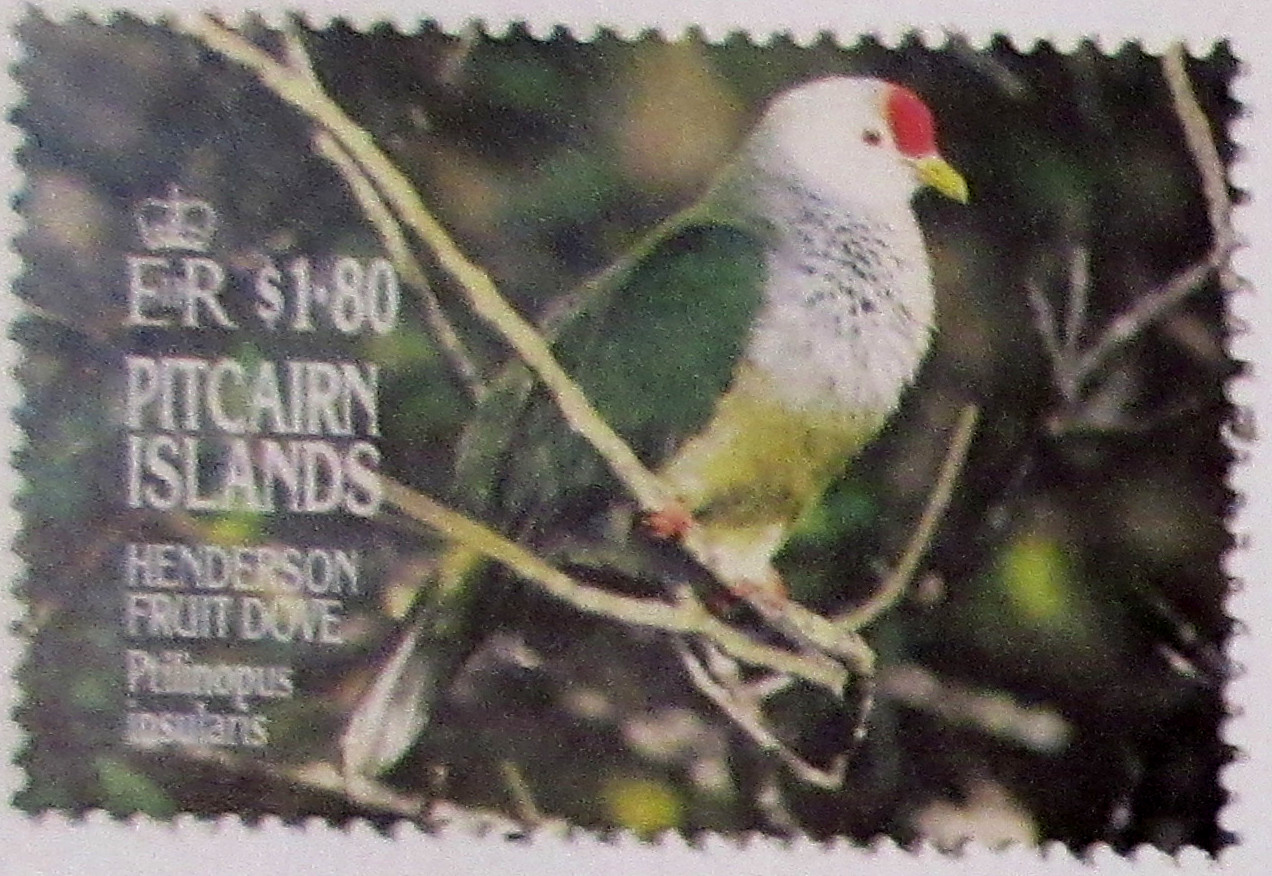
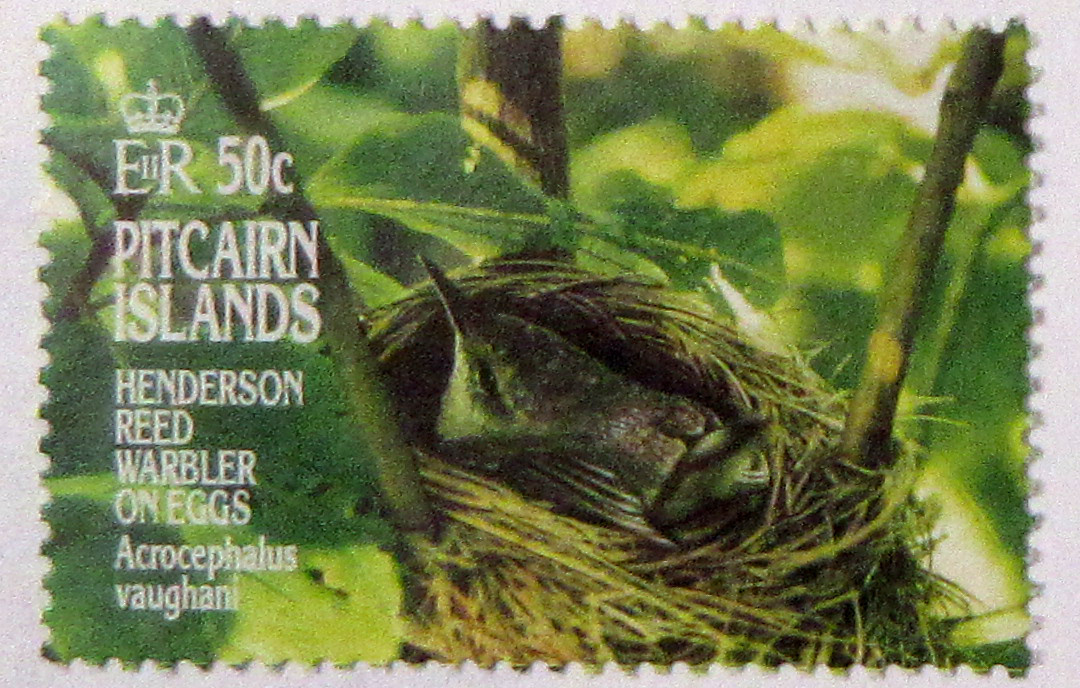
The four endemic bird species are:
- Henderson Crake/Rail (Porzana atra)
- Henderson Fruit-dove (Ptilinopus insularis)
- Henderson (Steven's) Lorikeet (Vini stepheni)
- Henderson Reed-warbler (Acrocephalus taiti)
If you have any more information about Henderson Island,
please let me know.
email: lynn@thesalmons.org
More on Henderson Island:
-
Mark Winthrop's informative Henderson web page
-
From castaways to throwaways: marine litter in the
Pitcairn Islands
-
WCMC Descriptions of Natural World Heritage Properties
-
The Henderson Island Skeletons
-
Henderon Island Report
-
Pitcairn Islands Study Center
-
Natural World Heritage
- References:
- Florence, J., Waldren, S. & Chepstow-Lusty, A.J. (1995)
"The flora of the Pitcairn Islands: a review." Biological Journal of the
Linnaean Society 56, 79-119.
(pdf)
- Waldren, S., Florence, J. & Chepstow-Lusty, A.J. (1995) "A comparison of the vegetation communities from the islands of the
Pitcairn Group", Biological Journal of the Linnean Society 56,
121-144.
(pdf)
-
Documents available at the library of the Australasian Arachnological Society:
- PROCTER, D. (1991) "Spiders of Henderson Island, a world heritage
site", Newsl. Br. Arachnol. Soc., November, Vol. 62, pp. 6.
- BENTON, T., LEHTINEN, P. (1995) "The arachnids of Henderson
Island, South Pacific", Newsl. Br. Arachnol. Soc., Vol. 72, pp.
10-12.
- Jones, P.,
Schubel, S., Jolly, J., Brooke, M. de L. & Vickery, J.
(1995) "Behaviour, natural history, and annual
cycle of the Henderson Island Rail Porzana atra (Aves: Rallidae)".
Biol. J. Linnean Soc. 56, 167-183.
- Steadman, D. W., and S. L. Olson. (1985) "Bird remains
from an archaeological site
on Henderson Island, South Pacific: Man caused extinctions on an 'uninhabited'
island". Proc. Natl. Acad. Sci. 82, 6191-6195.
- Graves, G.R. (1992) "The endemic land birds of Henderson Island, southeastern Polynesia: notes on
natural history and conservation."
Wilson Bulletin 104:32(12).
- Benton, T.G. and T. Spencer, Editors. PITCAIRN ISLANDS,
biogeography, ecology and prehistory,
Academic, 1995, ca. 420 pp., illustrations.
Partial contents: Structure, topography, and vegetation: the
significance of raised reef islands. The birds of Henderson island:
ecological studies in a near pristine system. Biogeographic processes
at the limits of the Indo-West Pacific Province. Man's impact on the
Pitcairn Islands.
-
Two New Petrels For One Old
-
Henderson Island Crake stamps
-
Postage stamps
Lynn Salmon <>{
Last updated: July 1, 2023