 Lynn <>{
Lynn <>{
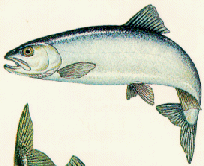
Lynn <>{ Pacific salmon are an important biological and economic resource of countries of the North Pacific rim. They are also a unique group of fish possessing unusually complex life histories. There are seven species of Pacific salmon, five occurring on both the North American and Asian continents (sockeye, pink, chum, chinook, and coho) and two (masu and amago) only in Asia.
The life cycle of the Pacific salmon begins in the autumn when the adult female deposits eggs which are fertilized in gravel beds in rivers or lakes. The young emerge from the gravel the following spring and will either migrate immediately to salt water or spend one or more years in a river or lake before migrating. Migrations in the ocean are extensive during the feeding and growing phase, covering thousands of kilometres. After one or more years the maturing adults find their way back to their home river, returning to their ancestral breeding grounds to spawn. They die after spawning, and the eggs in the gravel signify the beginning of a new cycle. Upon this theme Pacific salmon have developed many variations, both between as well as within species.
From:
Groot, C., and L. Margolis (Editors). Pacific Salmon Life
Histories. 608 pages, illus., 16 pages col. illus., 197 b/w
illus., 1991, ISBN 0-7748-0359-2, cloth, $65.00 Tr.
Also see Chris and John's (grade 5) report on the Salmon Life Cycle.
Lynn Garry Salmon <>{